Streamlined data logging and monitoring for data-driven training
By observing the training environments of athletes and sports coaches and communicating with them, we identified the issues they face in collecting, analyzing, and monitoring their data. Our goal was to make these processes more efficient for data-driven training, in order to prevent injuries and help athletes achieve maximum performance.
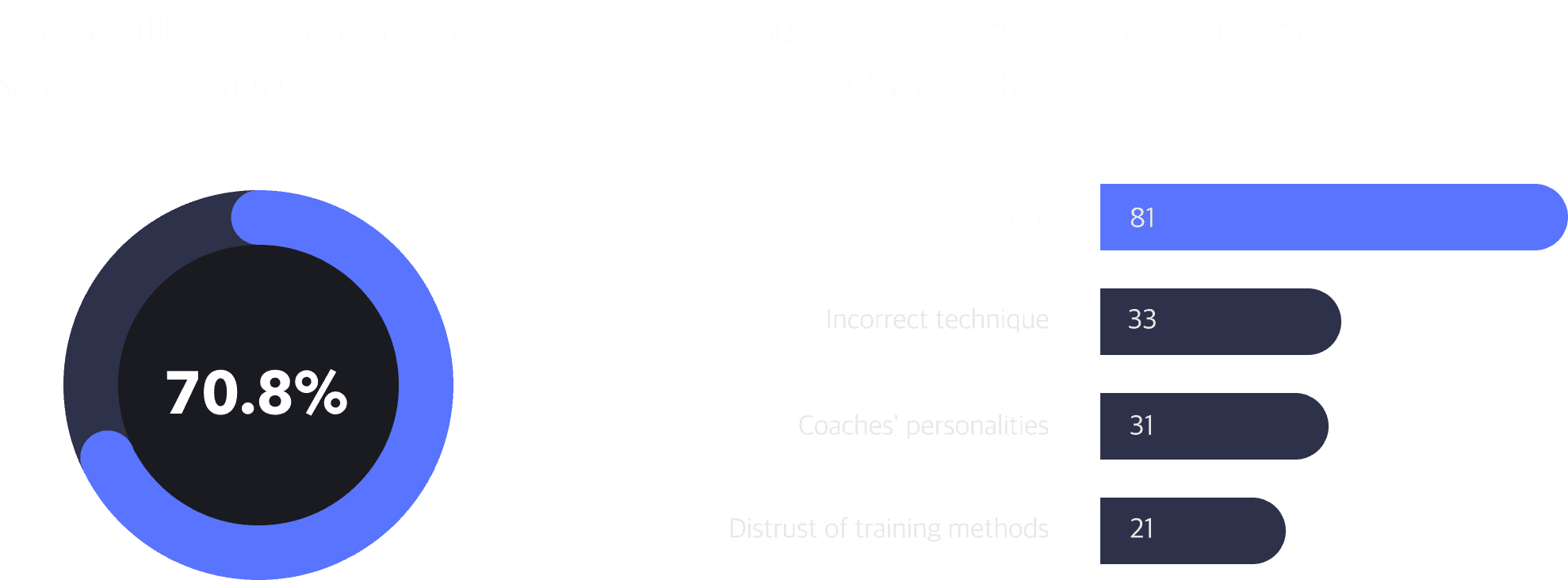
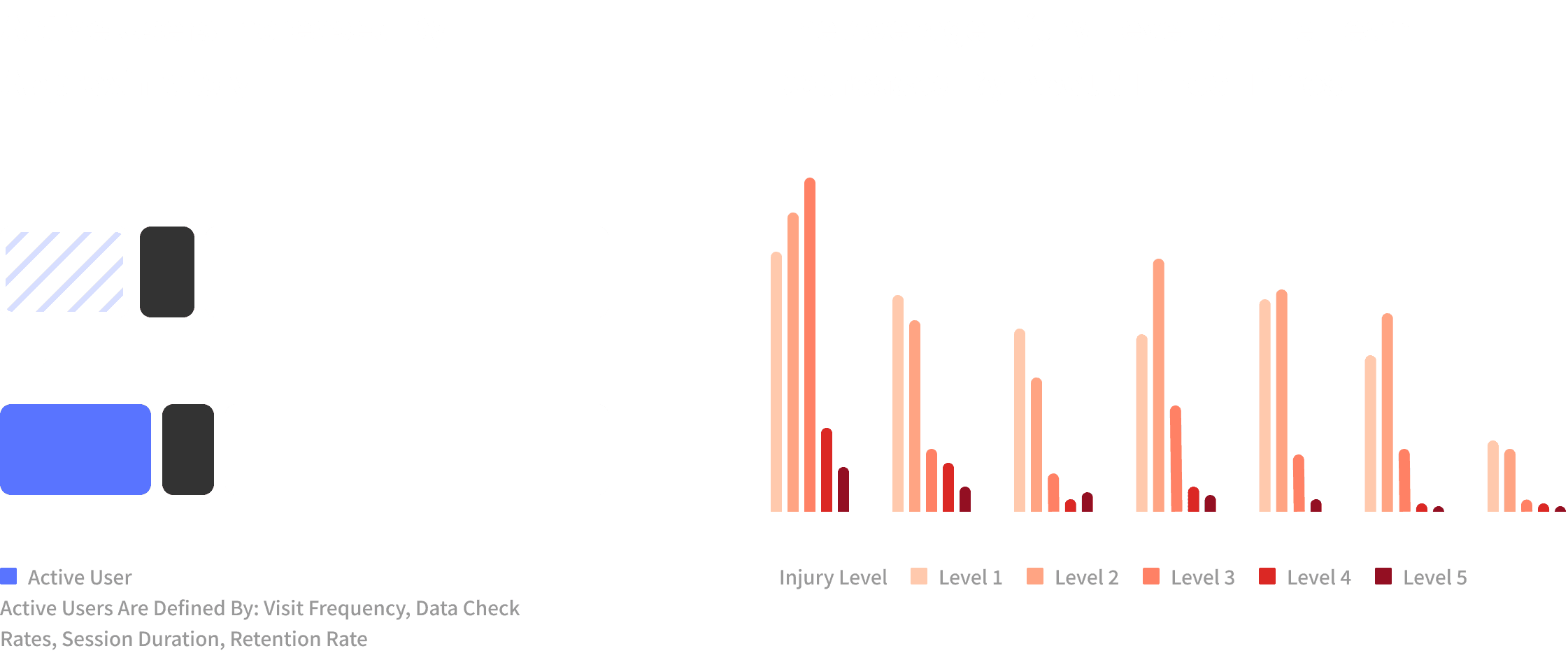
Due to the lack of data monitoring, athletes are suffering severe injuries from excessive training. This issue has led to early retirements among young athletes. Preventing injuries has become crucial, as it impacts their entire career.
Source: Korea Institute of Sports Science - Systematic Plan for Conditioning Centers for Injured Elite Athletes / Korean Sports & Olympic Committee Career Support Center for Retired Athletes
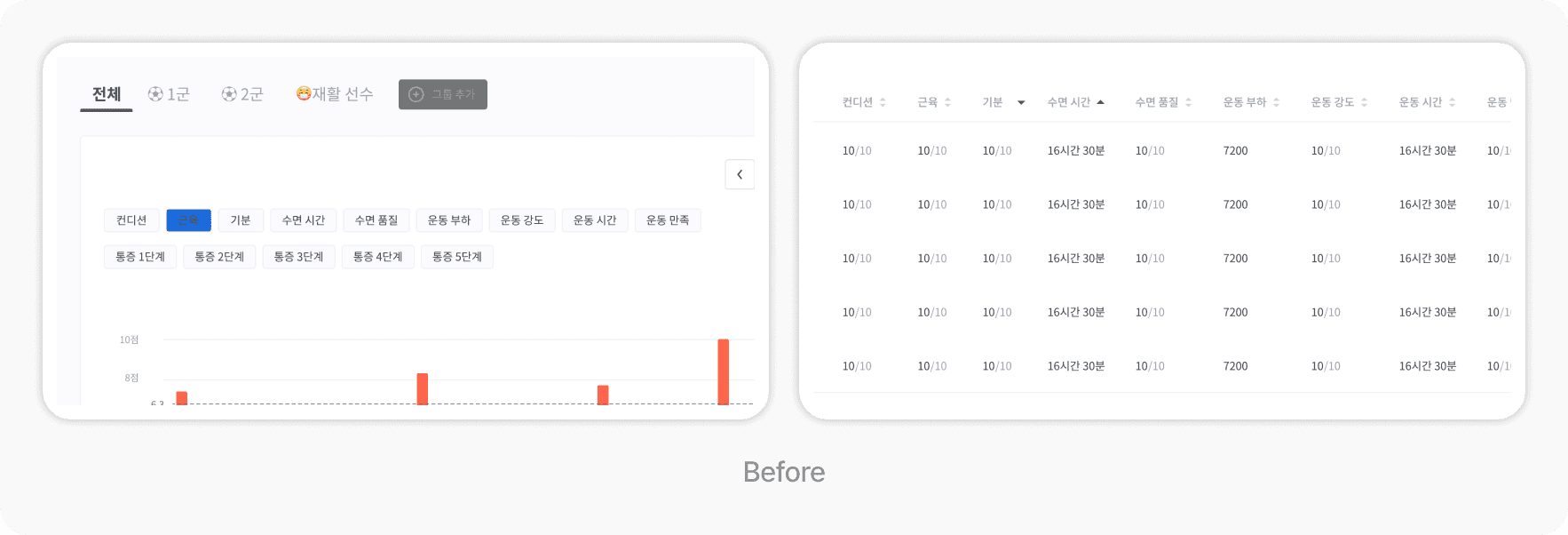
We received positive feedback from beta testers during our MVP phase. However, after signing contracts with teams and monitoring their usage, we found that the actual usage rates among most teams, both in individual and team sports, were significantly low.
*Usage was evaluated based on a comprehensive set of criteria, including visit rates, data check rates, and time spent on the platform.
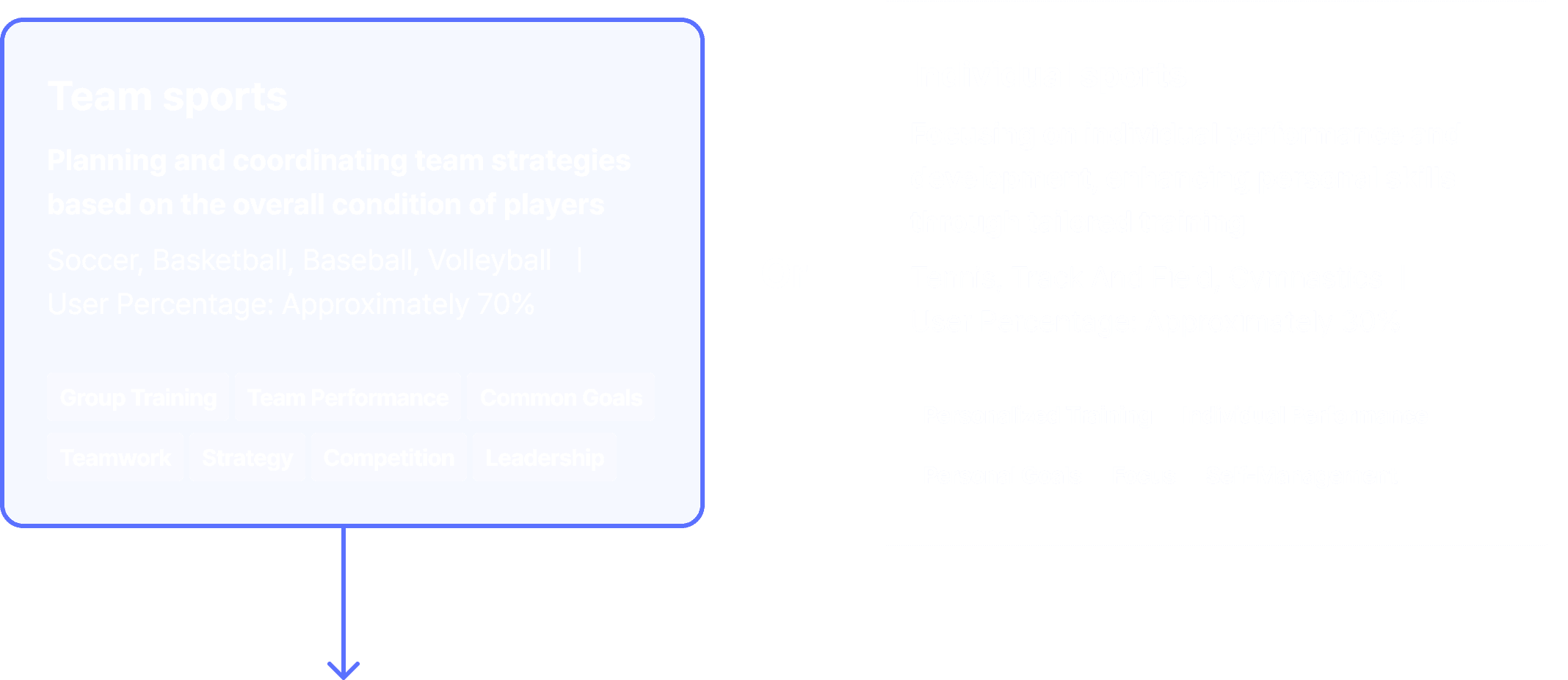
Before investigating why users were not using the product, we realized it would be difficult to understand and address all the issues arising from the diverse environments and cultures of different sports. Therefore, as a first step, we categorized sports into team sports and individual sports, analyzed the characteristics of each group, and focused on one user segment to identify and resolve the issues.
In individual sports, training is personalized to each athlete's goals. However, in team sports, the focus on overall team objectives can often overlook individual conditions and injury risks. This highlights the greater need for effective data monitoring in team sports to ensure individual needs are not neglected.
Based on this analysis, we decided to focus on team sports, where we believe we can add more value with our service and gain valuable insights, especially in the early stages.
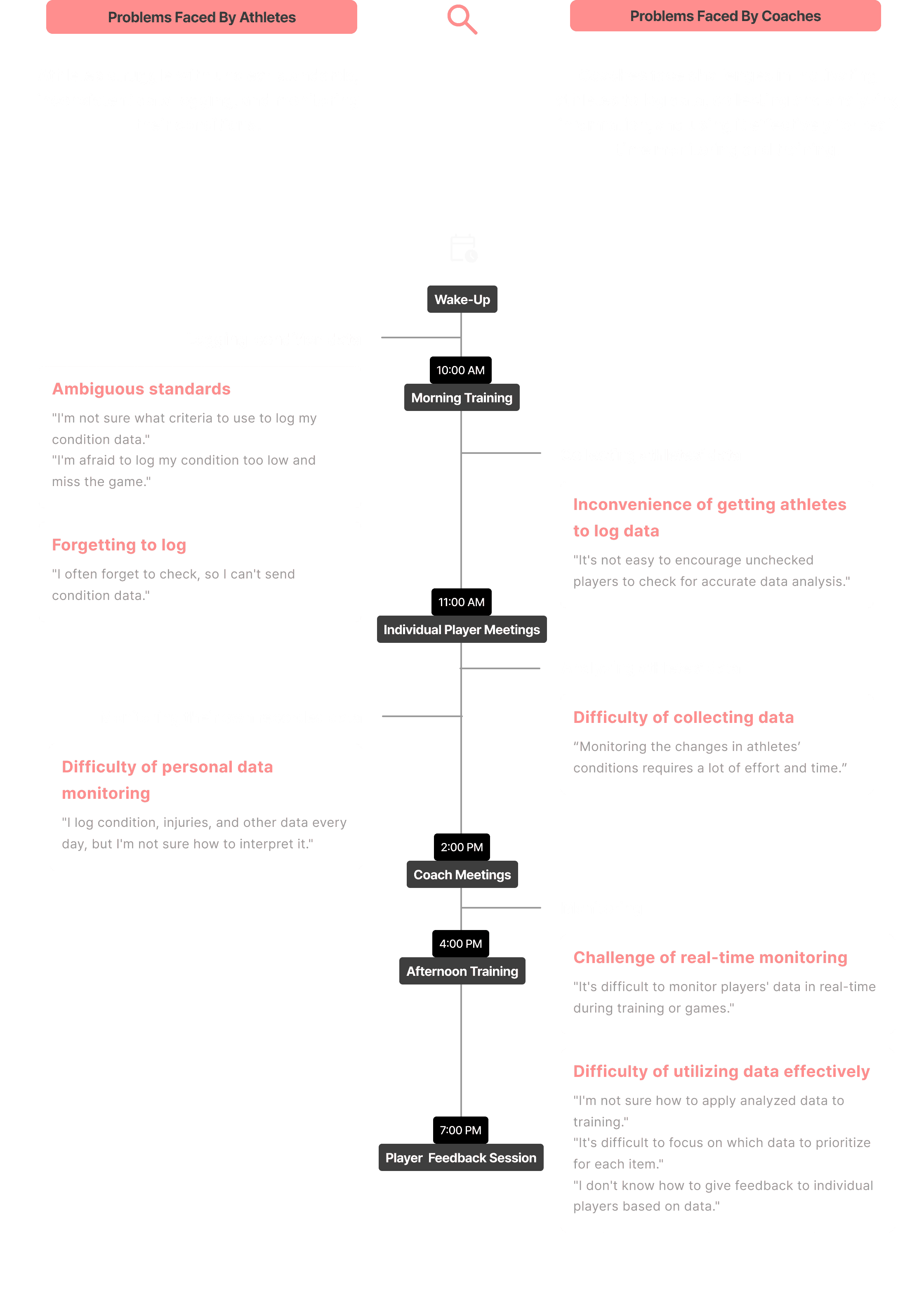
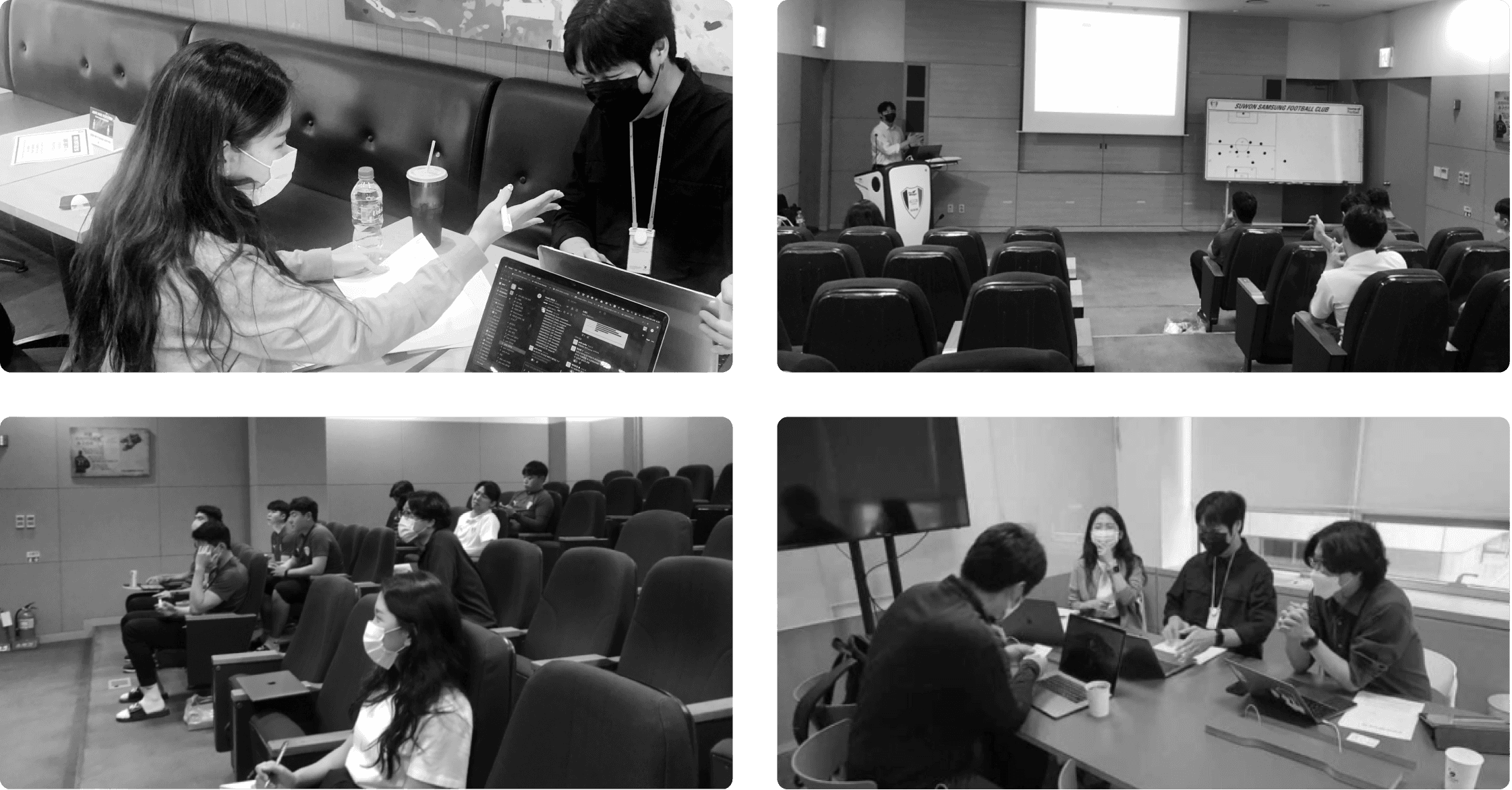
We visited team offices, coaching offices, and medical rooms to observe the working environments of the coaching staff, their training preparations, and athlete management. By immersing ourselves in their field and meeting with athletes and coaches, we identified challenges they faced and problems we could solve within their daily schedules.
Problem to Solution
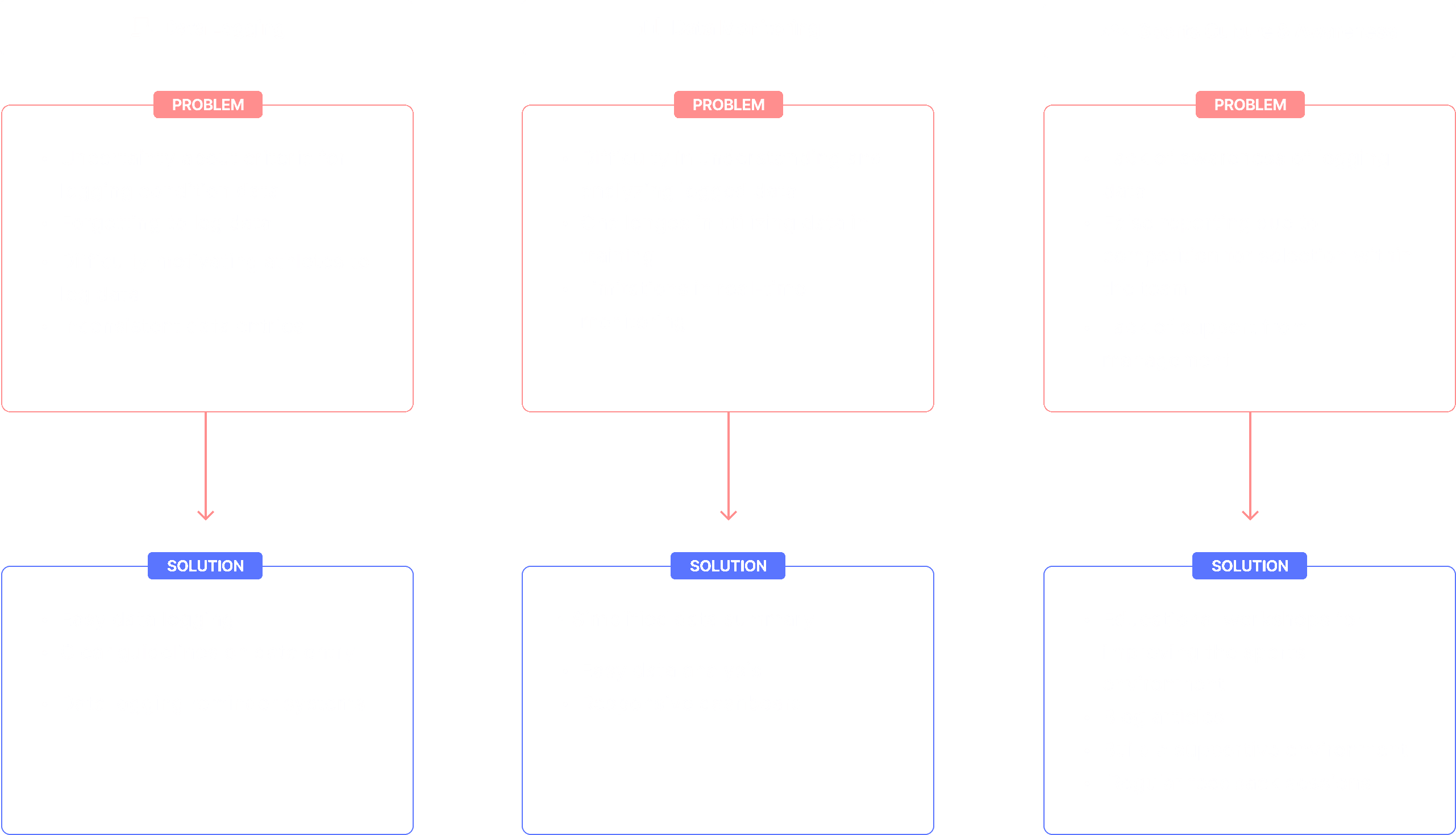
From the problems identified in the athletes' and coaches' daily schedules, we grouped them into three categories: data logging, monitoring, and sports culture & awareness. We then proposed solutions for each category to address and resolve the issues they face.
Stakeholders' Goals
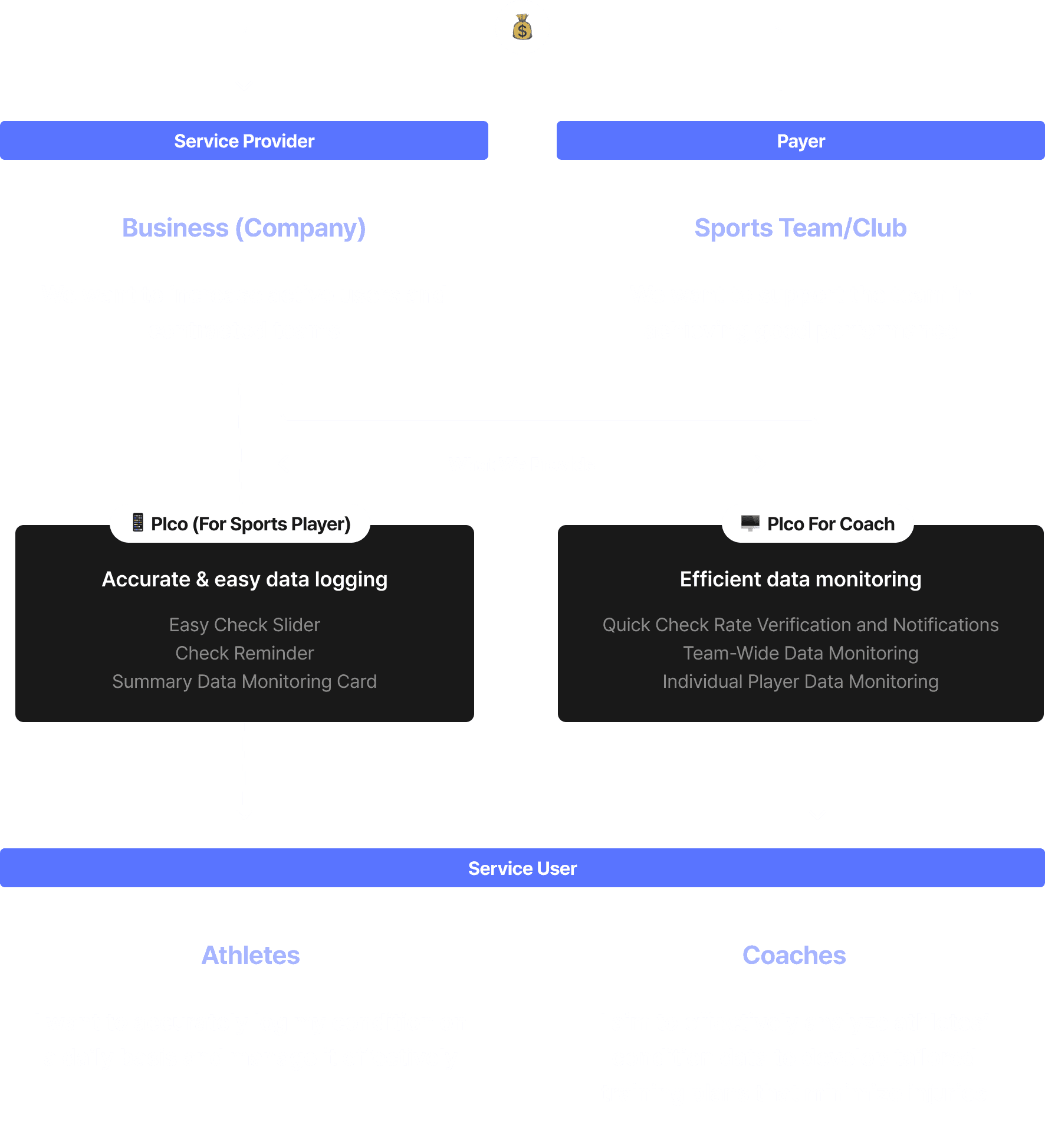
Before diving into the solution, we organized stakeholders' goals through discussions with each stakeholder. This enabled us to plan a solution that aligns with their objectives.
For Athletes
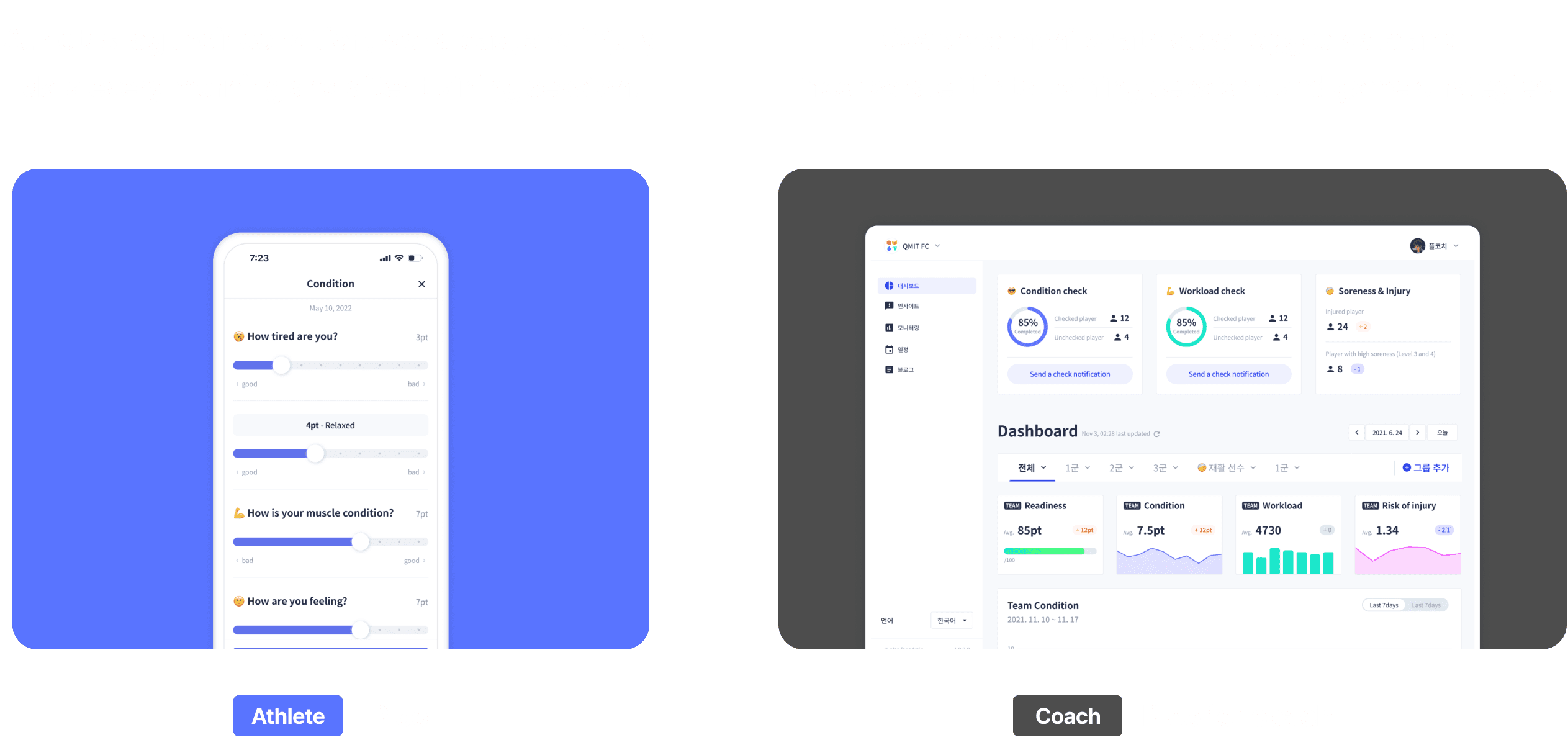
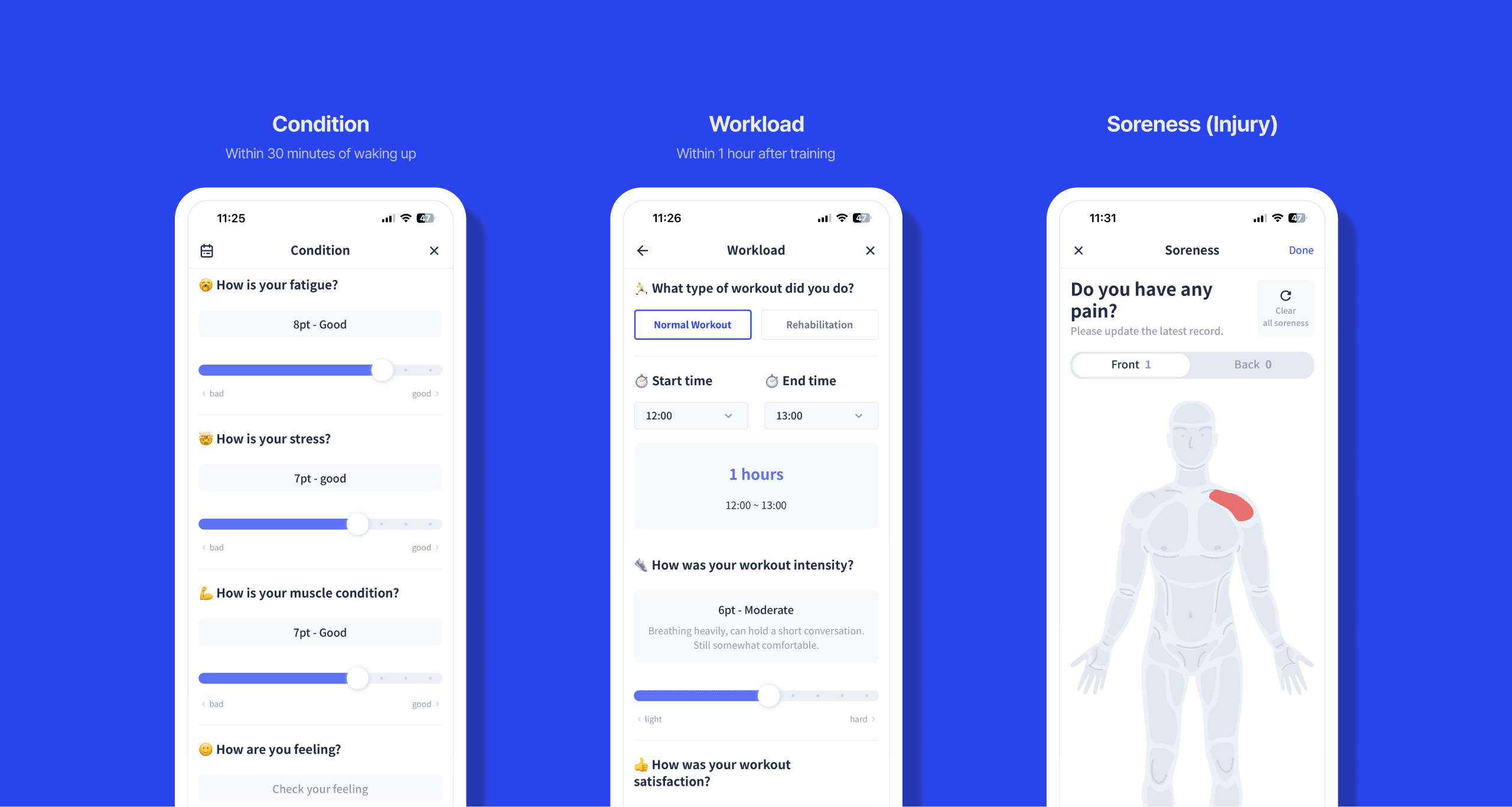
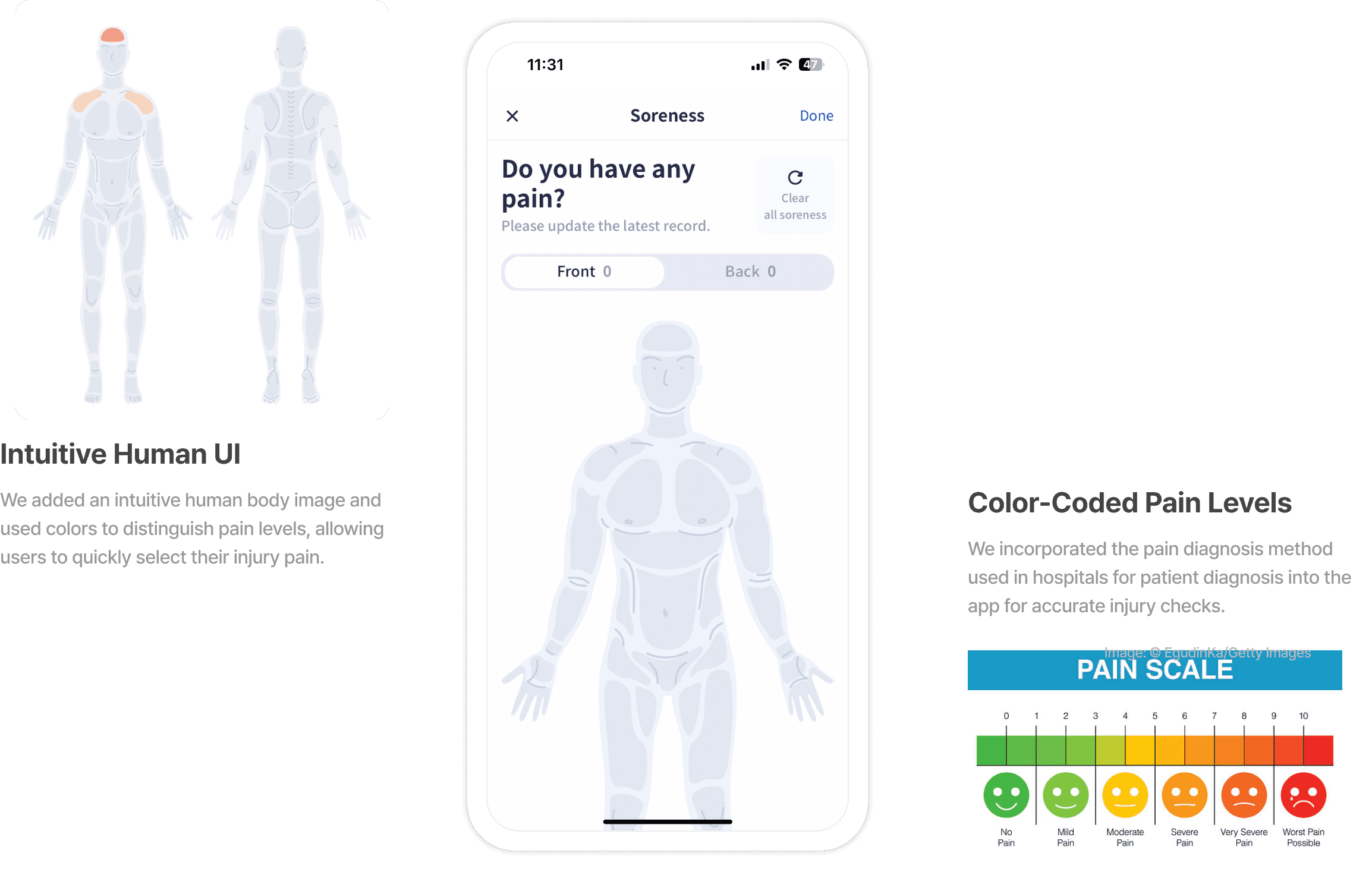
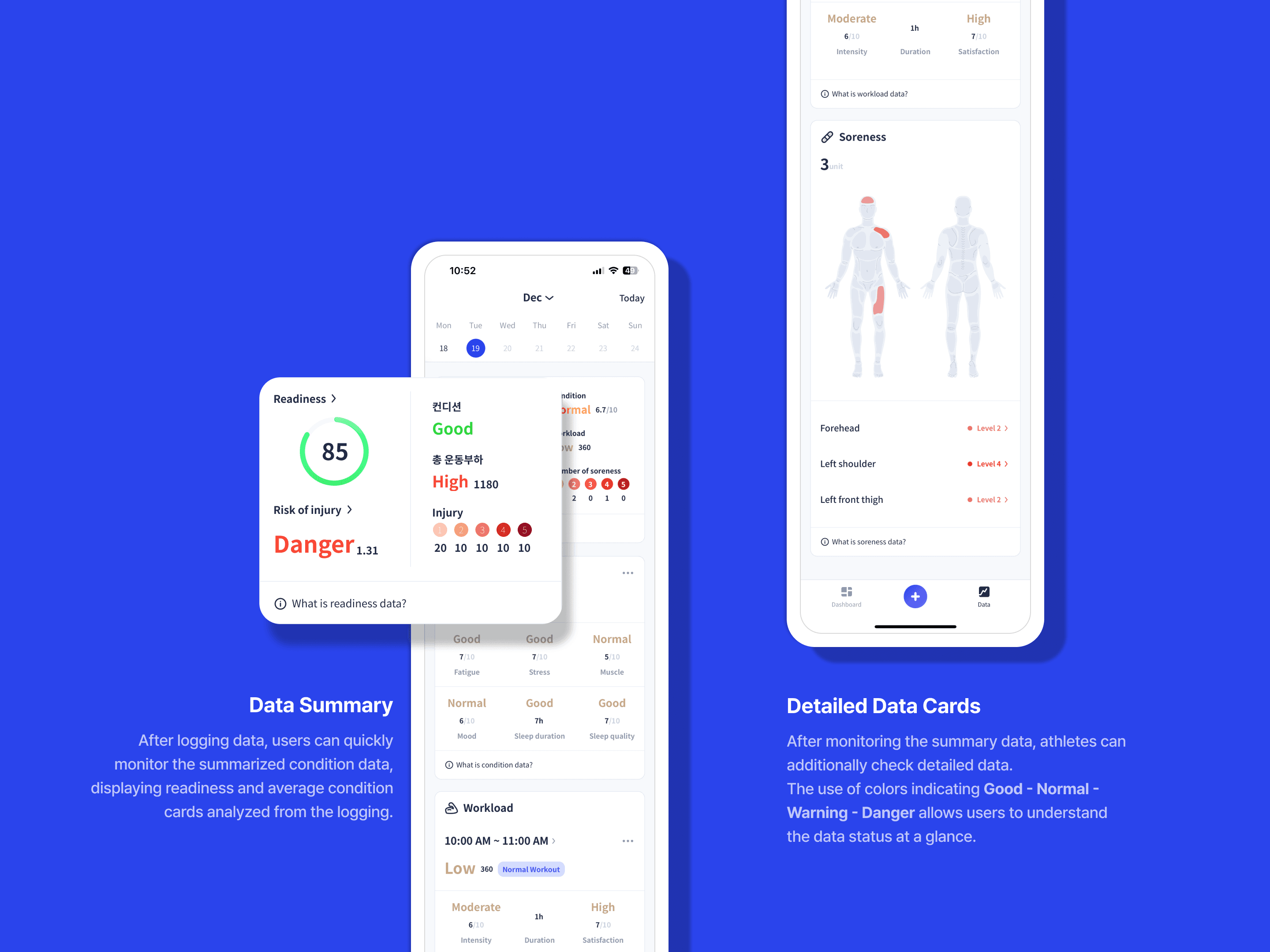
We focused on creating an intuitive and streamlined experience for athletes to accurately log their daily conditions and injuries, as well as providing simplified and effective monitoring solutions for ongoing performance optimization.
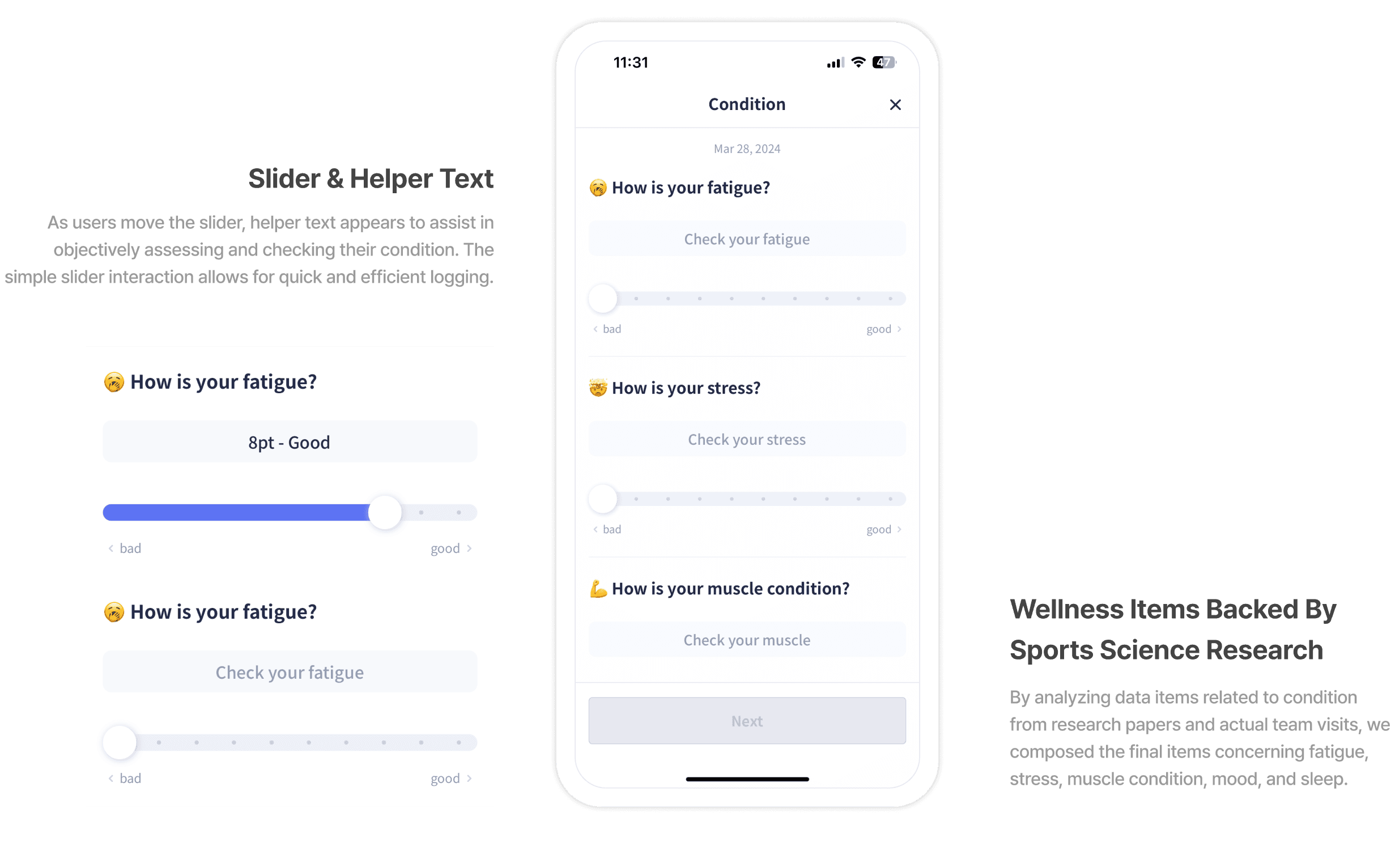
Solution 1 | Data Logging
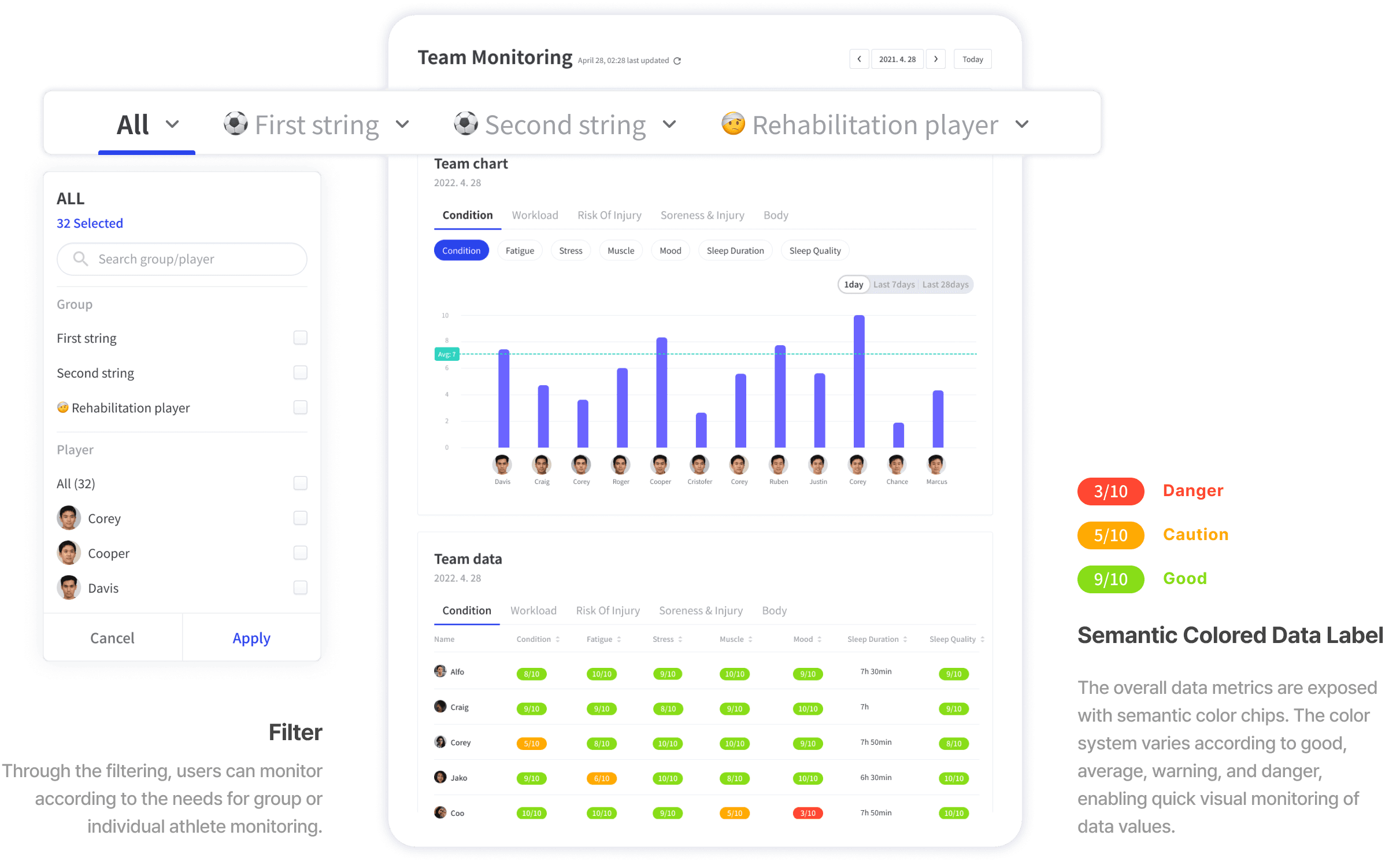
Solution 2 | Data Monitoring
For Coaches
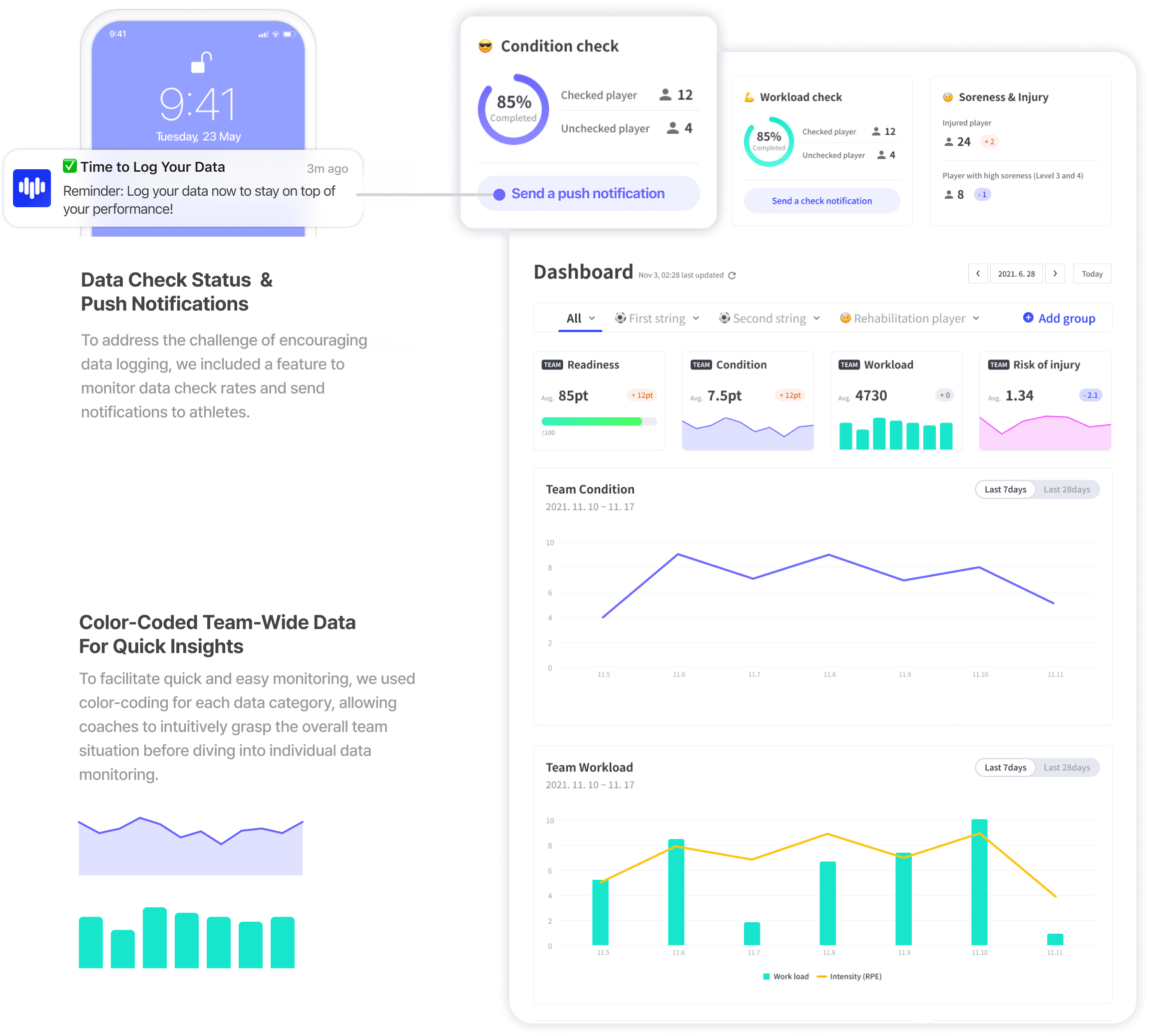
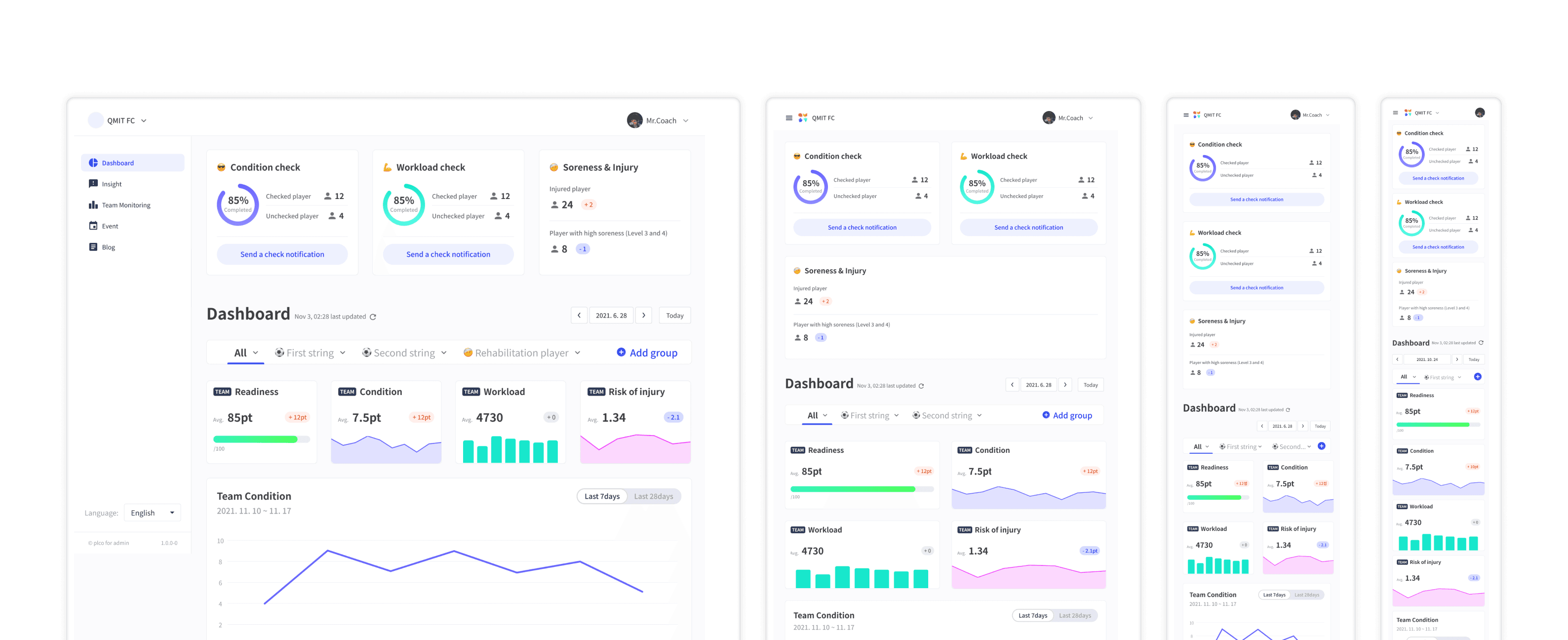
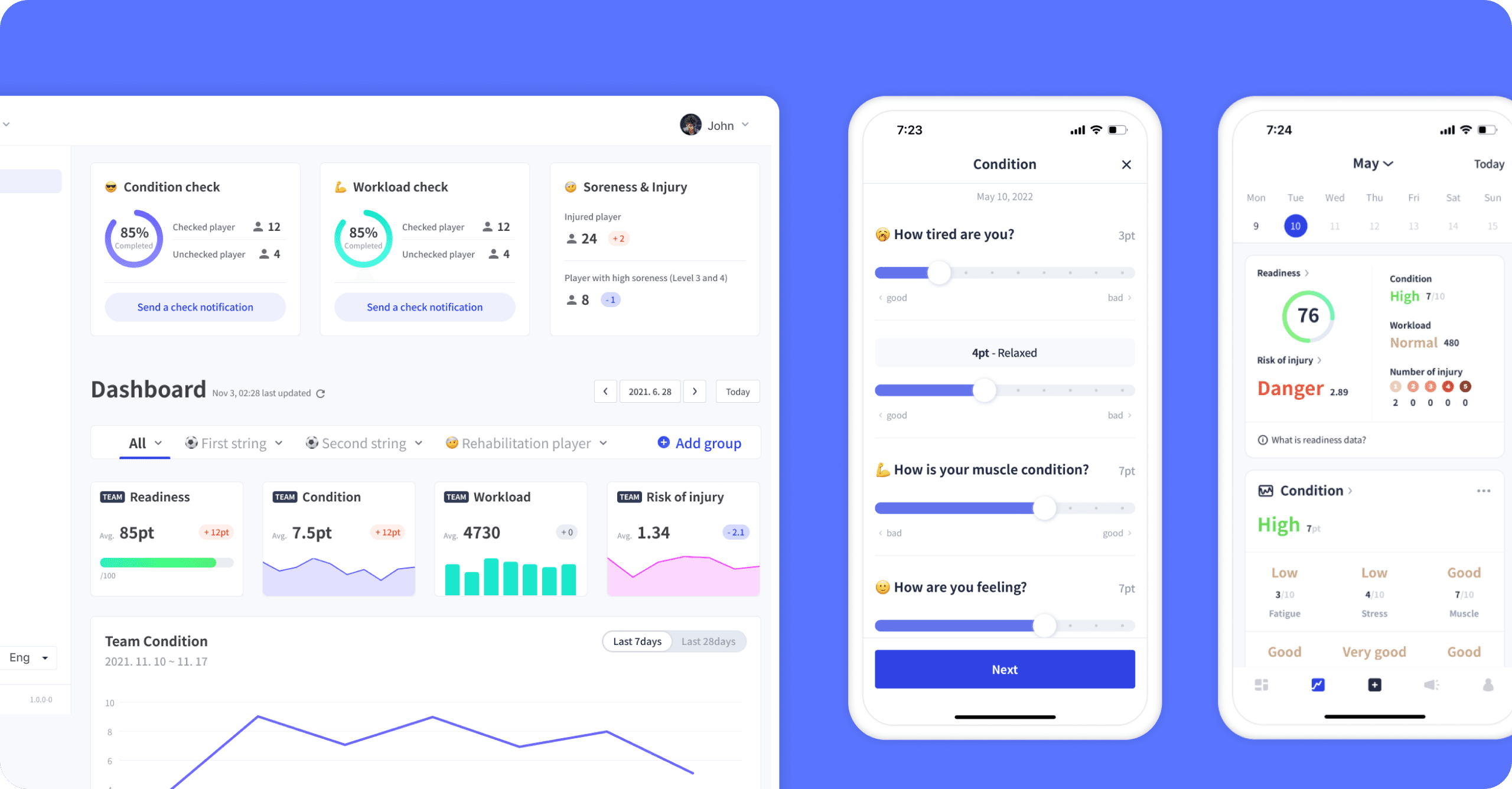
To replace the cumbersome manual data collection process, we added a section where coaches can view the check status at a glance. Charts are used to provide an overview of the team's overall condition and changes before detailed monitoring.
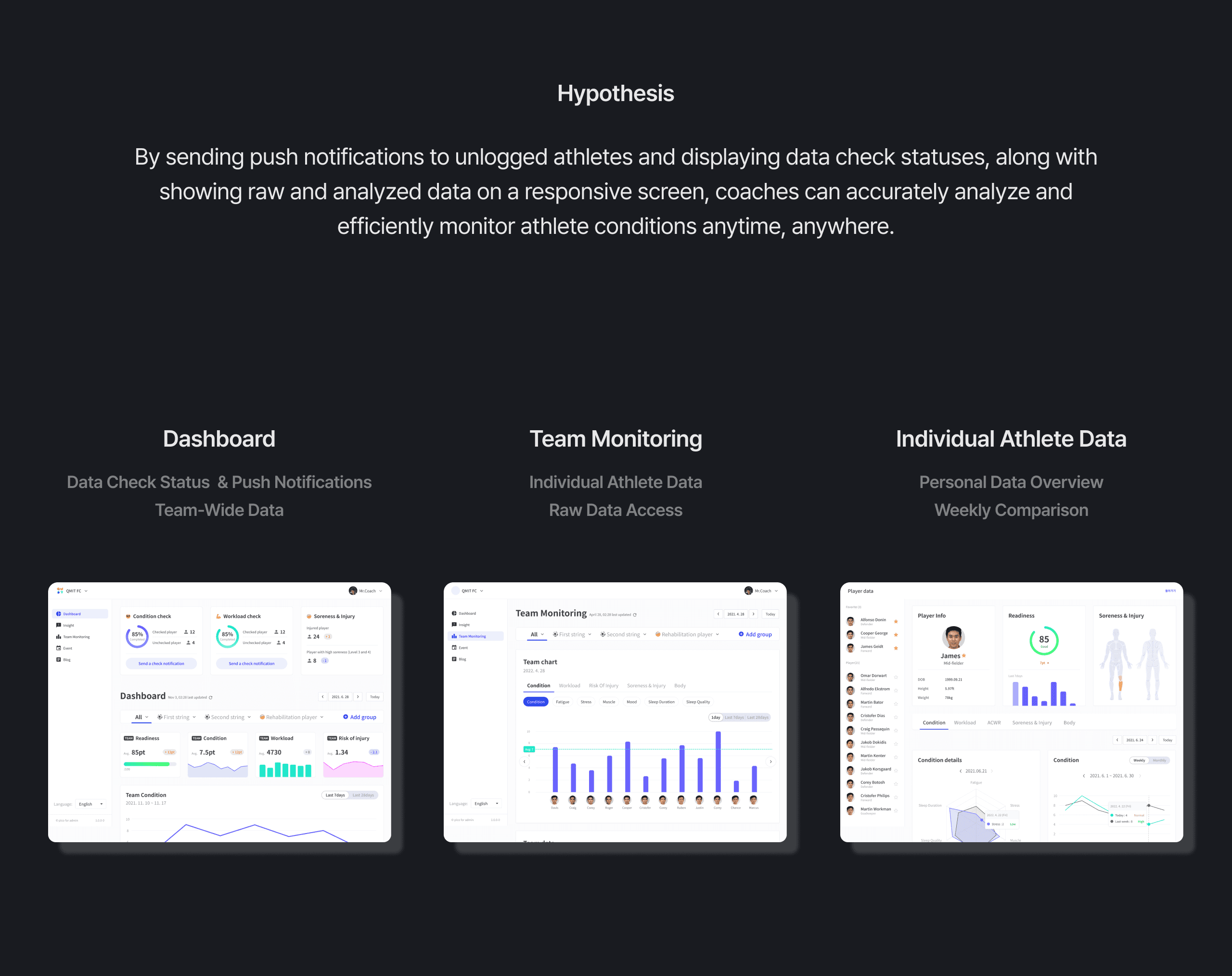
Designed to provide an overview of the raw data that athletes data daily. The team chart and team data area are separated according to the monitoring exposure method, allowing for monitoring via charts or tables as needed.
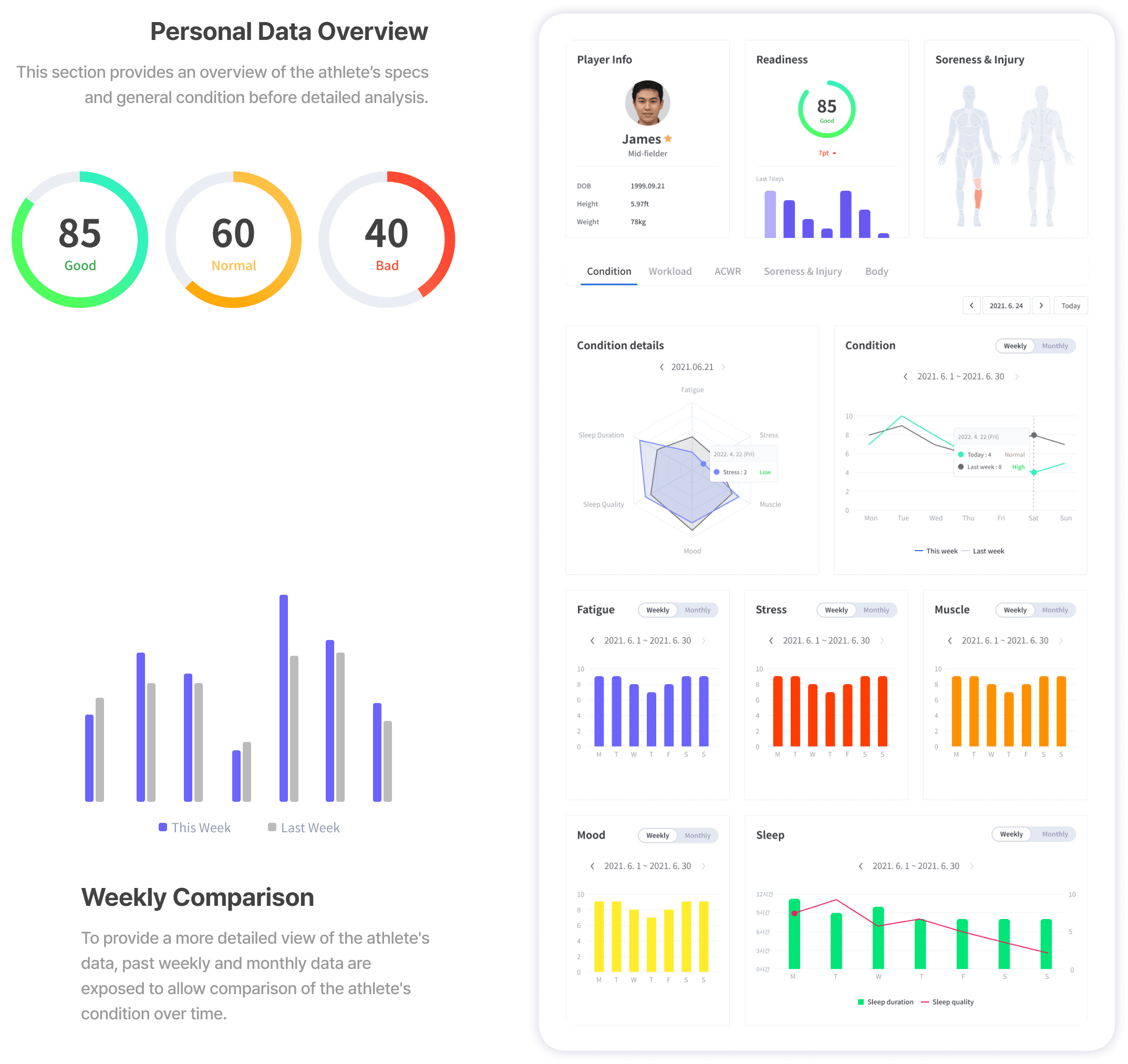
After gaining an understanding of the overall team condition and individual athletes from the team monitoring, coaches can navigate to individual athlete pages for detailed monitoring. These pages include comprehensive profiles, injury reports, and intuitive tracking of condition changes, providing a holistic view of each athlete's status.
Coaches can conveniently monitor athlete data during training or matches, allowing them to check real-time performance and take necessary actions quickly. We set four breakpoints to ensure responsive design, providing an optimal data monitoring experience on mobile, tablet, laptop, and desktop.
Metrics improved about six months after the last update
Developing sports-related products provided valuable insights from various users. Initially, the lack of domain knowledge posed challenges; however, with the team's help and by visiting users' environments, I developed deep empathy for them. Continuous event tracking and Voice of the Customer (VOC) analysis enabled me to understand user needs comprehensively. By observing and understanding the users, I identified and addressed their fundamental problems. This process significantly contributed to my growth as a designer committed to enhancing user experience and solving their problems.
I'm always excited to connect with new people and explore new opportunities. Whether you have an exciting role in mind, a question, or just want to say hello, feel free to reach out.
I'd love to hear from you!